The Question We Are Not Asking About the Creative Economy
The creative economy is entering a new phase of development.
In some countries, it has become an increasingly visible component of discussions on economic diversification, innovation, tourism, entrepreneurship, and sustainable development. In others, it remains largely associated with arts and culture, with its broader economic and developmental potential still only partially recognised.
Yet regardless of where countries find themselves on this journey, a common challenge persists.
Policymakers and institutions are increasingly expected to support the development of cultural and creative sectors and industries as contributors to economic growth, employment, exports, tourism, innovation, and social development. At the same time, governments are exposed to multiple frameworks, advisory approaches, international agendas, and sector-specific priorities. Because the creative economy is transversal by nature, responsibility for its development is frequently dispersed across ministries, agencies, and policy domains. This can result in fragmented interpretation, uneven prioritisation, and parallel implementation efforts.
The challenge is therefore not simply one of policy. It is increasingly one of governance. This distinction matters.
The development of the creative economy as a policy and development field has required significant effort to build awareness, establish definitions, generate evidence, strengthen recognition, and support the development of policies, institutions, and sector-specific interventions. Considerable attention has also been devoted to understanding individual sub-sectors, their economic contribution, and the regulatory environments in which they operate.
These efforts have been necessary and valuable. Yet as the field matures, a different set of questions begins to emerge. How effectively do institutions coordinate around shared objectives? How well are trade, investment, intellectual property, education, innovation, and cultural policies interacting with one another? How capable are governments of translating ambition into coordinated action?
And how well do existing governance arrangements support implementation across multiple ministries, agencies, intermediary organisations, and market actors?
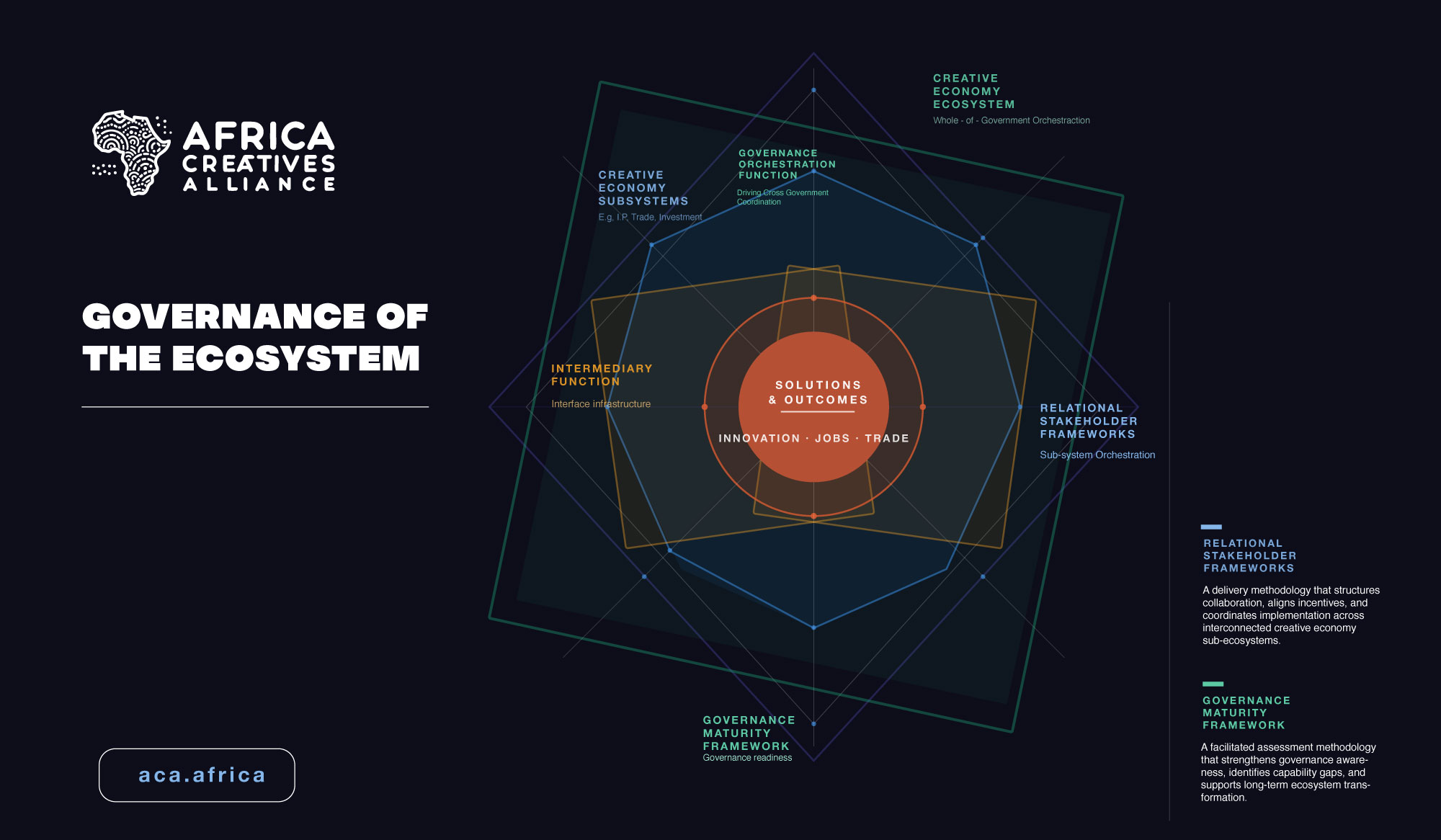
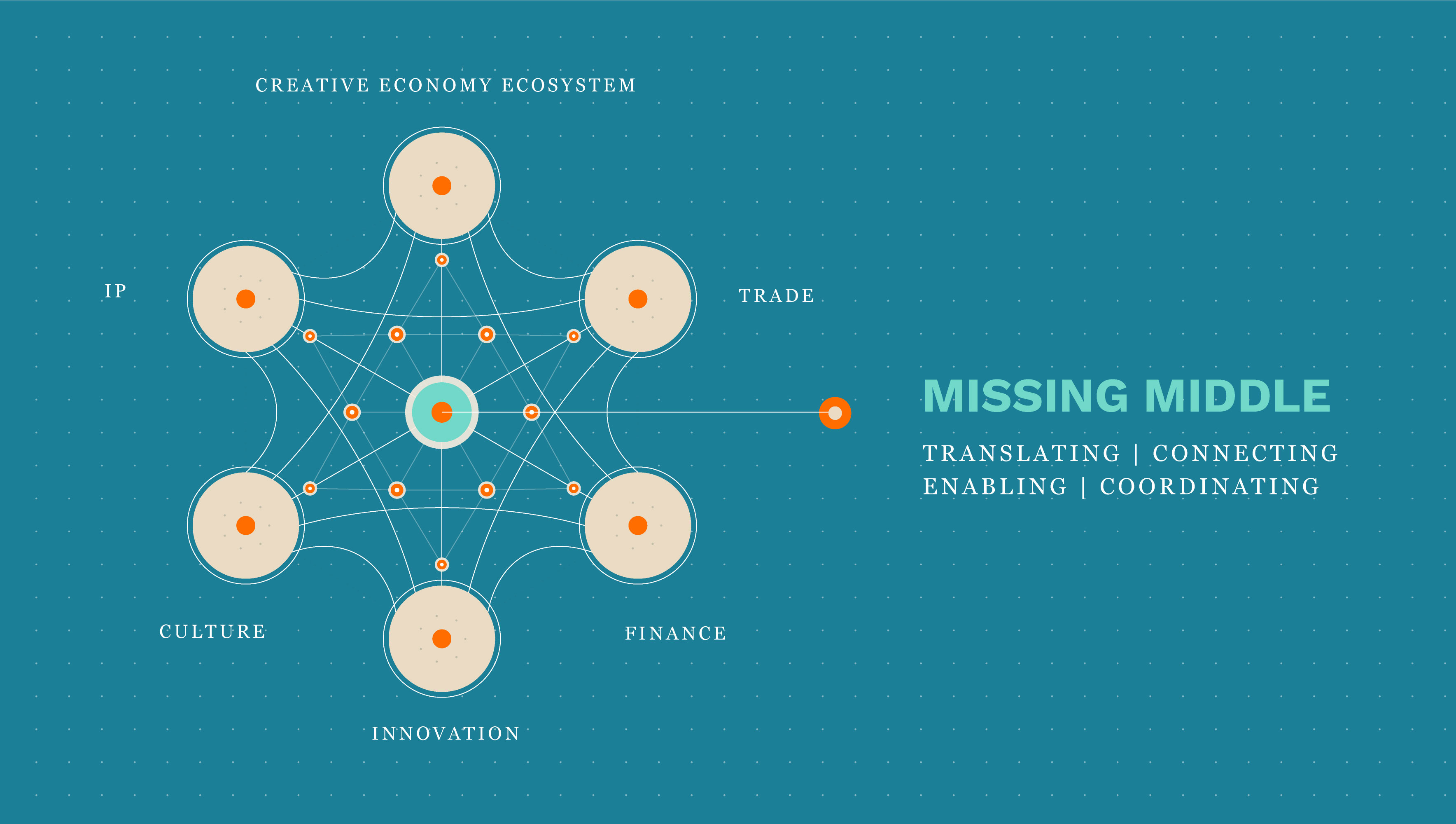
These questions are becoming increasingly important because the creative economy does not operate as a single sector. It functions as a system of interconnected systems.
Its performance depends not only on cultural policy, but on the interaction between governance, trade, intellectual property, investment, education, finance, intermediary infrastructure, innovation systems, and entrepreneurship. The effectiveness of any one component is shaped by the quality of its relationship with the others.
This challenge is not unique to the creative economy. Similar patterns can be observed across tourism development, innovation ecosystems, industrial transformation, green economy transitions, and sustainable development agendas. In each case, the issue is often not the absence of vision, but the ability to organise collaboration, align incentives, and coordinate action across institutional and sectoral boundaries.
The creative economy offers something particularly valuable.
Because of its inherently cross-sector nature, it provides a unique lens through which to examine how governments coordinate complex ecosystems and how effectively institutions work together to deliver outcomes.
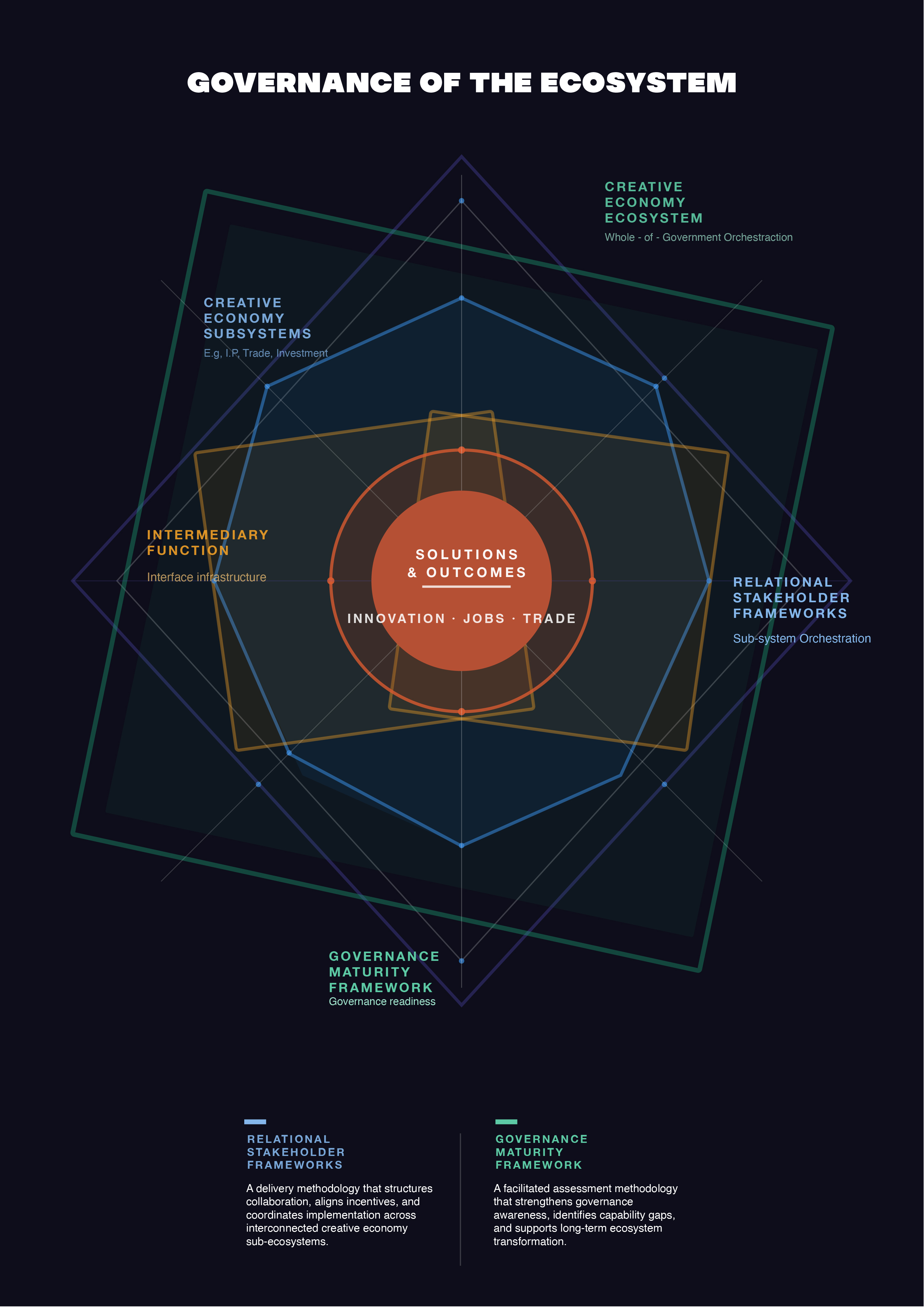
© Johanna Kouzmine-Karavaïeff, Africa Creatives Alliance, 2026
This perspective sits at the heart of The Delivery Gap: Governance Pathways for the Creative Economy, a publication that will be pre-launched during the upcoming Uganda Catalyst Summit as part of a broader discussion on the creative economy as a catalyst for tourism, growth, and inclusion.
Uganda presents an interesting context for this conversation. Like many countries, it possesses rich cultural assets, entrepreneurial talent, growing creative sectors, and significant opportunities to strengthen the links between tourism, culture, innovation, and economic development. As policymakers increasingly explore how the creative economy can contribute to national development priorities, the question becomes not only what opportunities exist, but whether the governance systems responsible for connecting and activating them are equipped to realise their potential.
Perhaps the next frontier for the creative economy is not recognition, but governance capability. Not whether creative economy strategies exist, but whether institutions, stakeholders, and delivery systems are sufficiently connected to make them work.
Which leads to what may be one of the most important questions facing the field today:
How do we know whether a country's creative economy governance and delivery system is actually capable of delivering?
This matters because governments routinely assess sectors, programmes, institutions, and economic performance. They measure employment, exports, investment, enterprise growth, and cultural participation. Yet much less attention is given to assessing the governance systems responsible for connecting these elements. In practice, the effectiveness of creative economy policies often depends not only on the quality of individual interventions, but on the ability of institutions, stakeholders, and support systems to function as a coherent whole.
This question is rarely asked explicitly. If governance is the architecture through which creative economy ambitions become outcomes, then understanding the strengths and weaknesses of that architecture may be one of the most important tasks ahead.
This is the question that informed the development of The Delivery Gap: Governance Pathways for the Creative Economy and the work that continues beyond it.
Johanna Kouzmine-Karavaïeff
Director, Research & Creative Economy Systems
Africa Creatives Alliance