Why building the creative economy was never the hardest part
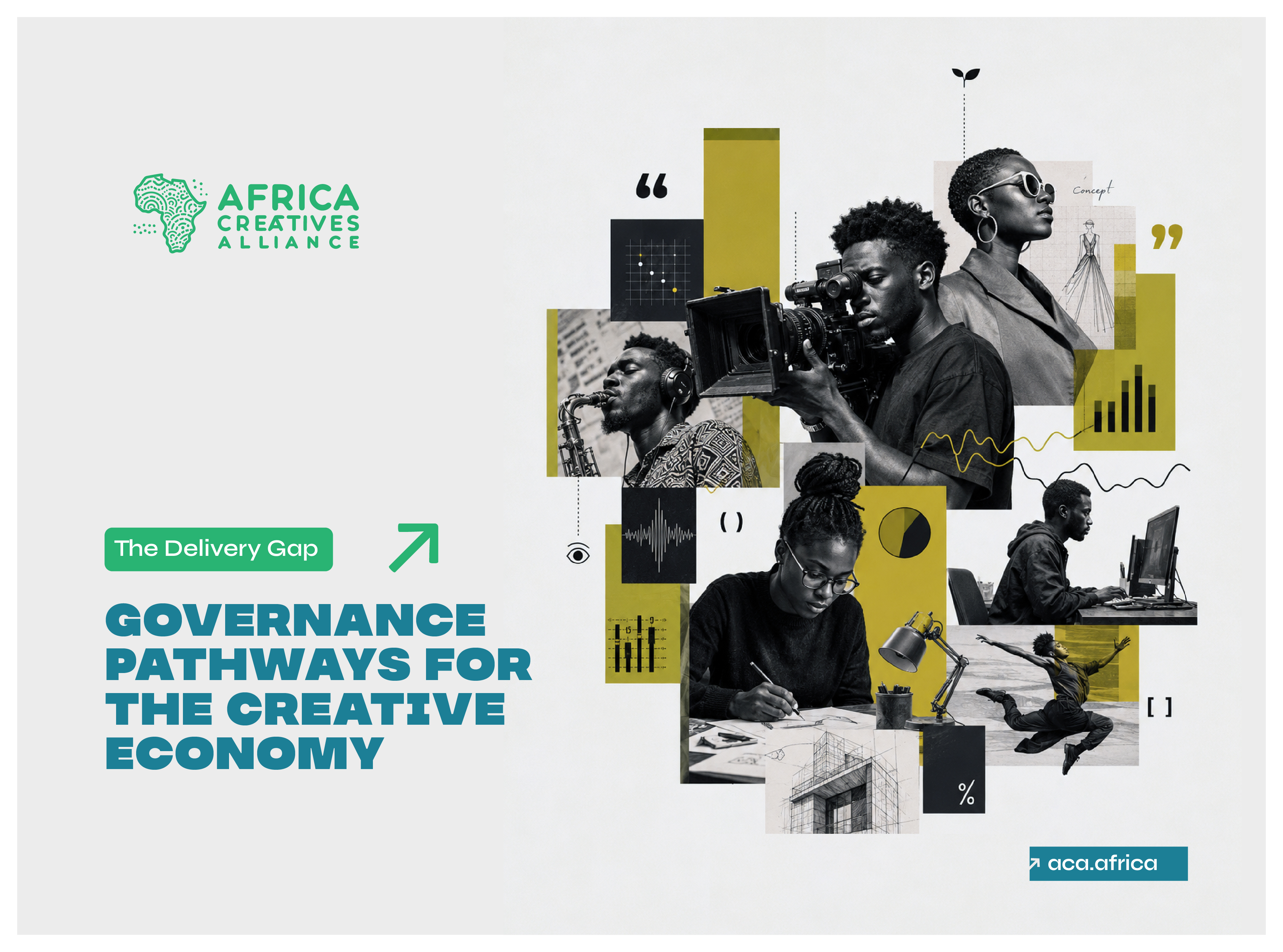
As we prepare for the launch of The Delivery Gap Governance Pathways for the Creative Economy later this summer, I here reflect a bit on the journey that led from our previous publication Moonshot 8: An Orchestrated and Prosperous Creative Economy to this next step. It represents an evolution in thinking that has developed over the past two years.
The first publication is about an ambitious vision for Africa's creative economy, the new focus is exploring what it actually takes to deliver that vision.
Moonshot 8…deliberately set out this ambitious vision—one that would require governments, institutions and ecosystems to think differently about Africa's creative economy. A moonshot is, after all, an undertaking that appears almost impossible at first, demanding vision, collaboration and persistence to achieve what once seemed out of reach. Looking back, I realise that the titles of these two publications almost tell the story by themselves.
The second is called The Delivery Gap because, after working across countries and institutions over the past two years, the biggest challenge became impossible to ignore: we increasingly know what needs to happen, but still struggle with how to make it happen.
It has now been two years since we published Moonshot 8. Our ambition was to place the creative economy where it belongs: at the heart of Africa's development agenda.
The report argued that the creative economy should not be treated as a niche cultural policy, but as a strategic pillar alongside Agenda 2063, industrialisation, AfCFTA, innovation and entrepreneurship. Looking back, I realise that the report was fundamentally asking one question:
What kind of creative economy does Africa want to build?
It invited governments, regional institutions and ecosystem actors to think bigger. It outlined the building blocks of a thriving creative economy—from enabling legislation and investment mechanisms to intermediary organisations, international frameworks and continental collaboration.
In many ways, it asked us to imagine what was possible. Naturally, much has evolved since then. Looking back, I also realise that my own thinking evolved with it.
Moonshot 8 captured where I believed Africa's creative economy needed to go.
The years that followed taught me something equally important: Why getting there is often so difficult. This realisation did not emerge from theory alone. It emerged from implementation.
Testing Moonshot ideas in practice
Over the past two years, those ideas have been tested through work with the African Development Bank, national governments, universities, intermediary organisations, regional networks and international collaborations.
Although the contexts were very different, the conversations became remarkably similar.
Different countries, political systems, priorities.
Yet almost exactly the same questions kept appearing; How do we coordinate institutions? Who is responsible for implementation? How do we move beyond isolated projects? How do strategies become everyday practice?
Different contexts, but the same underlying challenges. Not a lack of ambition, ideas, or even, in many cases, a lack of policy. But a lack of the systems that connect them.The question itself began to change.
Moonshot 8 asked:
What does Africa need to build an orchestrated and prosperous creative economy?
The Delivery Gap asks:
Why aren't we getting there despite the growing number of policies, strategies and investments?
That shift may seem subtle. In reality, it changes everything. Because it moves the discussion away from what governments should do towards how change actually happens.
A second chapter—not a new direction
In many ways, I now see The Delivery Gap as the second chapter of Moonshot 8. Moonshot 8 asked: What kind of creative economy does Africa want to build?
The Delivery Gap asks: What does it take to actually build it?
The vision has not changed. The question has.
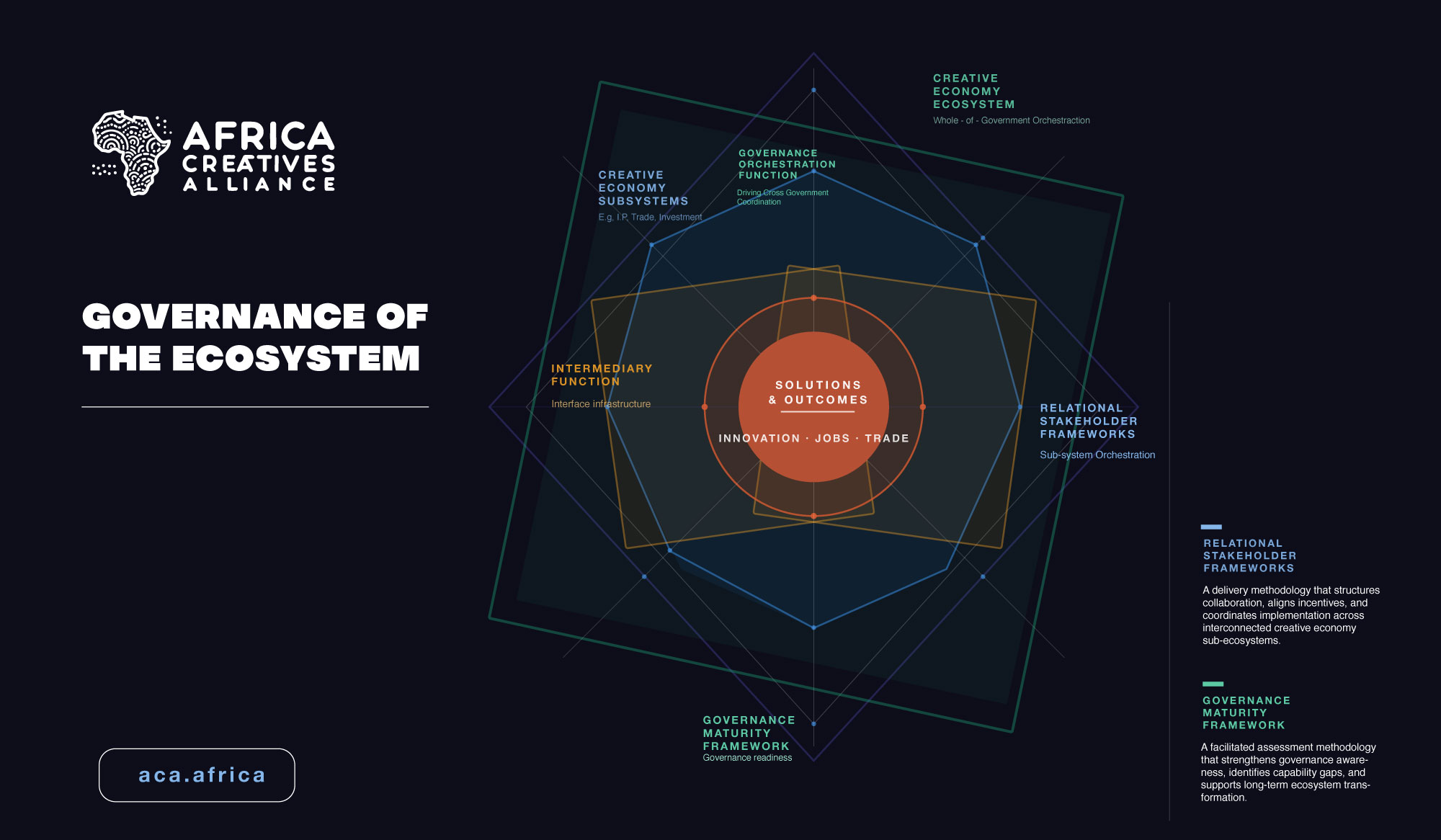
The core ingredients identified in Moonshot 8 remain exactly the same: strong policy, investment, intermediary organisations, coordination and regional collaboration. What has changed is our understanding of how these pieces fit together. They cannot operate as isolated components.
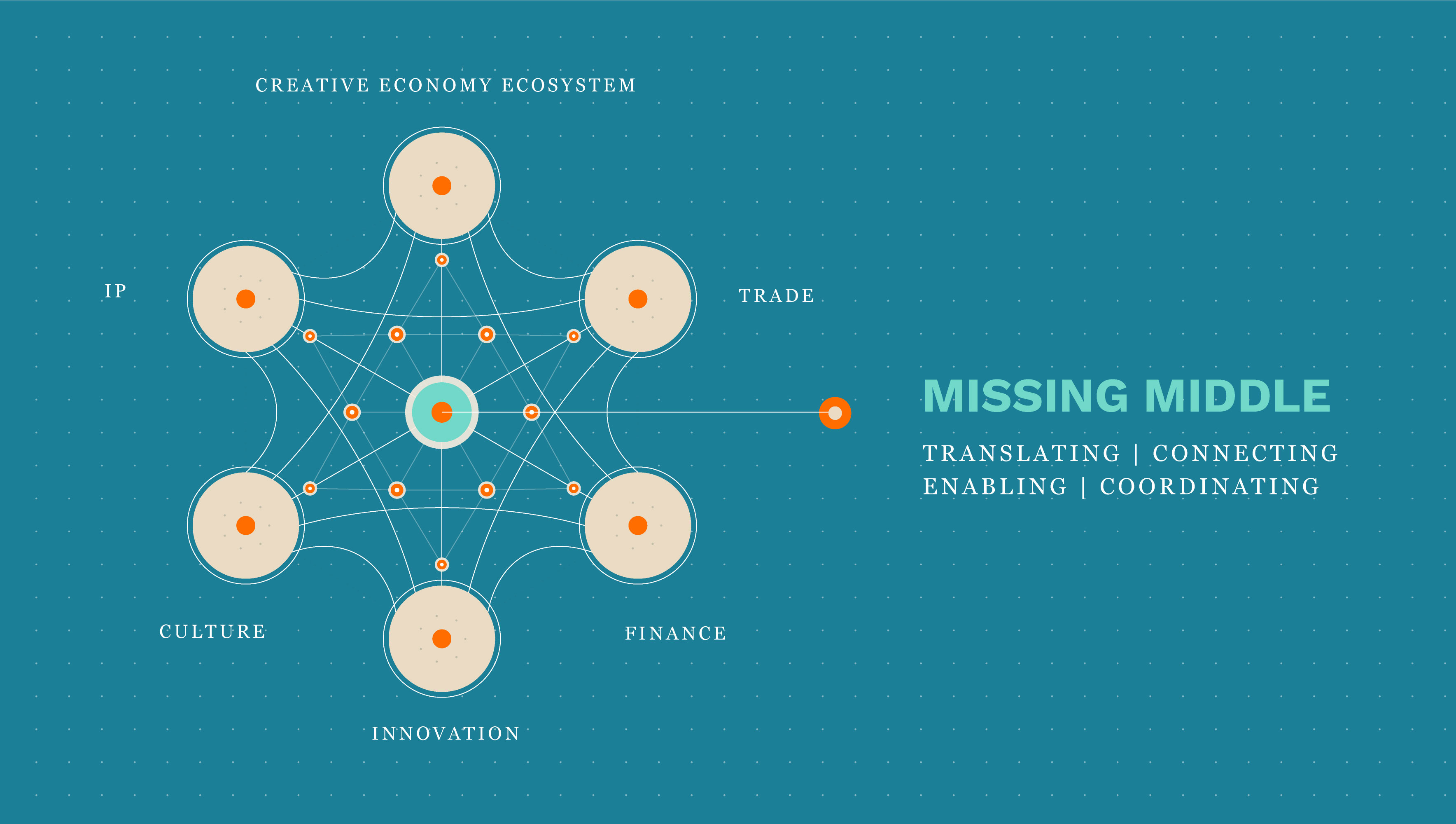
They require an enabling delivery infrastructure capable of connecting institutions, coordinating actors, supporting implementation, building trust, facilitating collaboration and ensuring continuity over time.
By delivery infrastructure, I do not mean physical infrastructure such as venues or production facilities—important as these are.
Rather, I mean the connective tissue of institutional functions, relationships and governance mechanisms that allows the rest of the ecosystem to work together.
Beyond possibility lies capability
Looking back, Moonshot 8 was fundamentally about possibility. It explained why the creative economy matters for Africa. It showed how culture and creativity contribute not only economically, but socially, territorially, diplomatically and across innovation systems.
It argued that the creative economy deserves a central place within Africa's future.
The Delivery Gap begins with a different question:
How do we build the capability to make that vision happen?
Capability means institutions that collaborate rather than compete.
It means intermediaries that connect policy with practice, governance systems that survive beyond individual projects. It means implementation becoming a recognised function of ecosystem development.
Beyond evidence
For years, many of us have worked to demonstrate that the creative economy creates jobs, drives innovation, contributes to exports and supports sustainable development.
That evidence is becoming increasingly strong. Yet evidence alone rarely changes systems.
Partly because many decision-makers are still insufficiently exposed to the realities and potential of the cultural and creative sectors. Partly because creative value is often judged through a narrow economic lens, when its contribution extends far beyond GDP—to education, identity, innovation, social cohesion, diplomacy, place-making and international positioning.
The question is therefore no longer simply whether the creative economy creates value. It is how societies recognise, organise and ultimately deliver that value.
Perhaps the real Moonshot
Looking back, I am no longer convinced that Africa's creative economy was ever the real Moonshot.
The real Moonshot is building the governance, intermediary capacity and delivery infrastructure that allow creativity to become a functioning economic system.
Policies, investment, institutions, intermediaries all matter.
But unless they become part of an organised system capable of delivering change, their impact will always remain smaller than their ambition.
That, to me, is the journey from Moonshot 8 to The Delivery Gap. Not a change of direction, but a deeper understanding of what it actually takes to get there.
Johanna Kouzmine-Karavaïeff
Director, Research, Research and Creative Economy Ecosystems, Africa Creatives Alliance