From Policy Ambition to Delivery Capacity: What the Dialogue Revealed
When Africa Creatives Alliance launched The Delivery Gap – Governance Pathways for the Creative Economy in September 2026, the starting proposition was deliberately straightforward: across Africa and beyond, the creative economy is increasingly recognised in policies, strategies, legislation and national development ambitions. Yet the economic and social outcomes expected from that ambition are not advancing at the same pace.
The question, therefore, is changing.It is no longer only: Do we have a creative economy policy? Increasingly, it is: Does the system surrounding that policy have the capacity to deliver?
The launch brought this question into dialogue with perspectives from the World Bank, the African Capacity Building Foundation (ACBF), implementation research and national government. While contributors approached the issue from different institutional and professional perspectives, a striking degree of convergence emerged.
The discussion reinforced the central premise of The Delivery Gap: the challenge is increasingly not simply to generate greater policy ambition, but to strengthen the systems through which that ambition can be translated into outcomes. It also surfaced several important implications for governments, development partners and creative-economy ecosystems.
1. The policy gap is increasingly a delivery gap
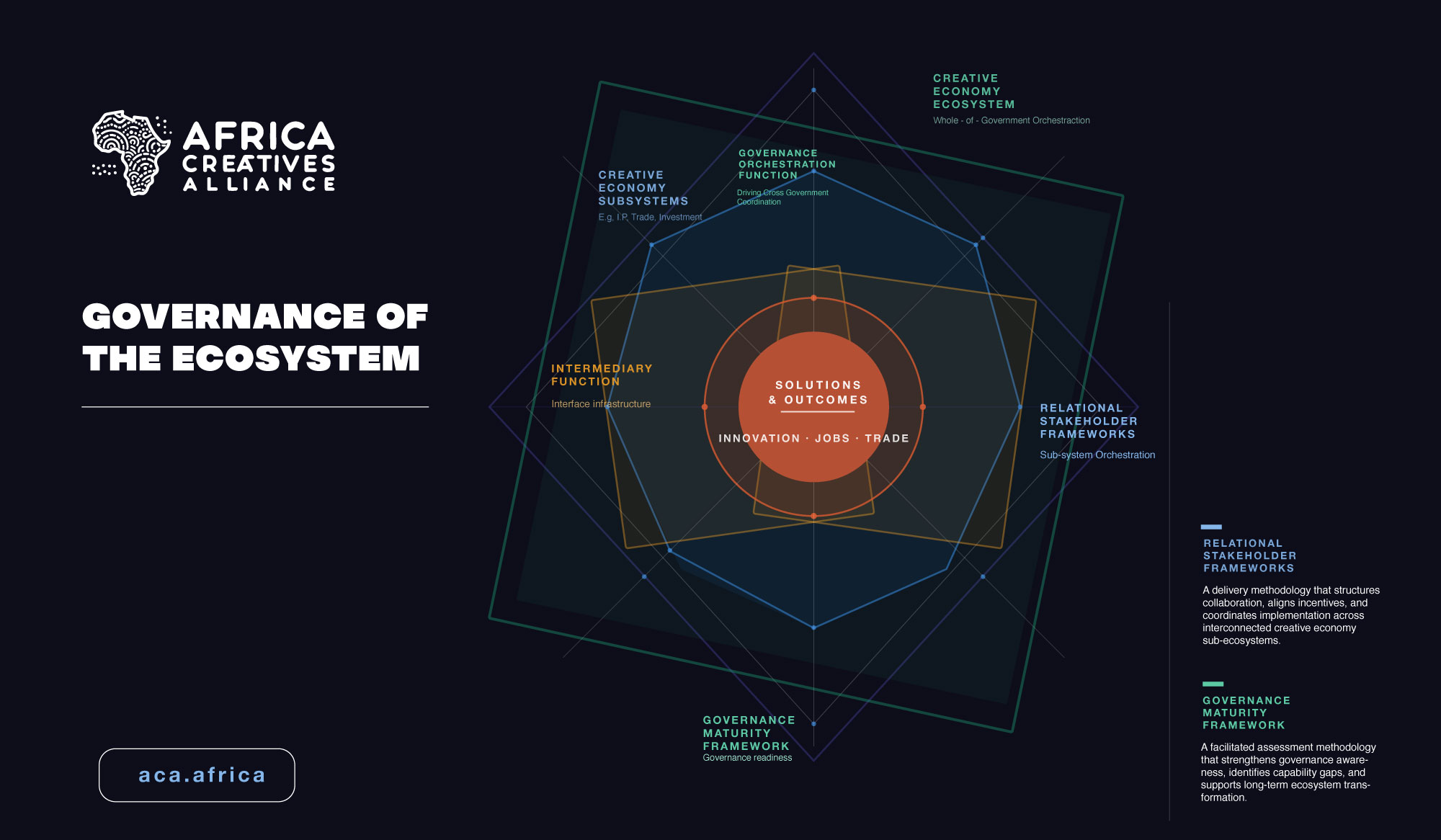
A central proposition of The Delivery Gap is that the starting point is no longer necessarily policy absence. In many countries, considerable policy architecture already exists. Creative economy ambitions are appearing across cultural policy, national development strategies, MSME and industrial frameworks, trade agendas, legislation and institutional reforms.
This represents important progress. But more policy does not automatically produce more coherence. As the creative economy becomes recognised across government, more ministries, agencies, programmes, laws and financing mechanisms become involved. Because the creative economy is transversal, every additional intervention also creates interfaces that need to function.
The result is something of a paradox: the more successfully the creative economy enters government agendas, the greater the need for coordination and delivery capacity.
This diagnosis was strongly echoed by Vara Vemuru of the World Bank, who shifted the question from whether creative economy policies exist towards whether institutions are capable of implementing them effectively. From a World Bank operational perspective, she described delivery as depending on coherent roles and responsibilities, coordination across ministries and levels of government, and connections between creators, investors, intermediaries and civil society.